The global quest for sustainable energy has long been defined by a fundamental compromise: the trade-off between clean power and continuous supply. We have embraced the sun and the wind, marveling at their sheer, untamed power, yet we remain tethered to the grid’s complex, costly infrastructure to manage their inevitable intermittency. The sun sets, the wind dies down, and the clean energy revolution pauses, demanding massive battery storage or the fallback of fossil fuels. This compromise has been the silent anchor dragging on the full potential of a truly green future.
But what if the solution was not to build bigger batteries, but to listen more closely to the Earth itself? What if the very process of life—the quiet, ceaseless work of plants—could be the source of uninterrupted, 24/7 power? This is not a vision from science fiction; it is the profound reality unlocked by the Plant-Microbial Fuel Cell (Plant-MFC) technology pioneered by Pisphere. It represents a philosophical and technological leap, moving us beyond the paradigm of harvesting energy from nature to one of co-generating energy with nature.
For centuries, we have viewed the plant kingdom as a source of food, fiber, and oxygen. Pisphere reveals a deeper truth: the plant is a living, breathing, low-voltage power station, operating continuously beneath our feet. This technology harnesses the natural, ongoing biological processes of the plant and the soil microbiome, transforming the earth itself into a vast, decentralized power grid. The promise is simple, yet revolutionary: continuous, carbon-neutral electricity, generated wherever plants exist. This is the end of the intermittency myth and the beginning of a truly symbiotic energy future.
The Silent Engine: Unpacking the Plant-Microbial Fuel Cell
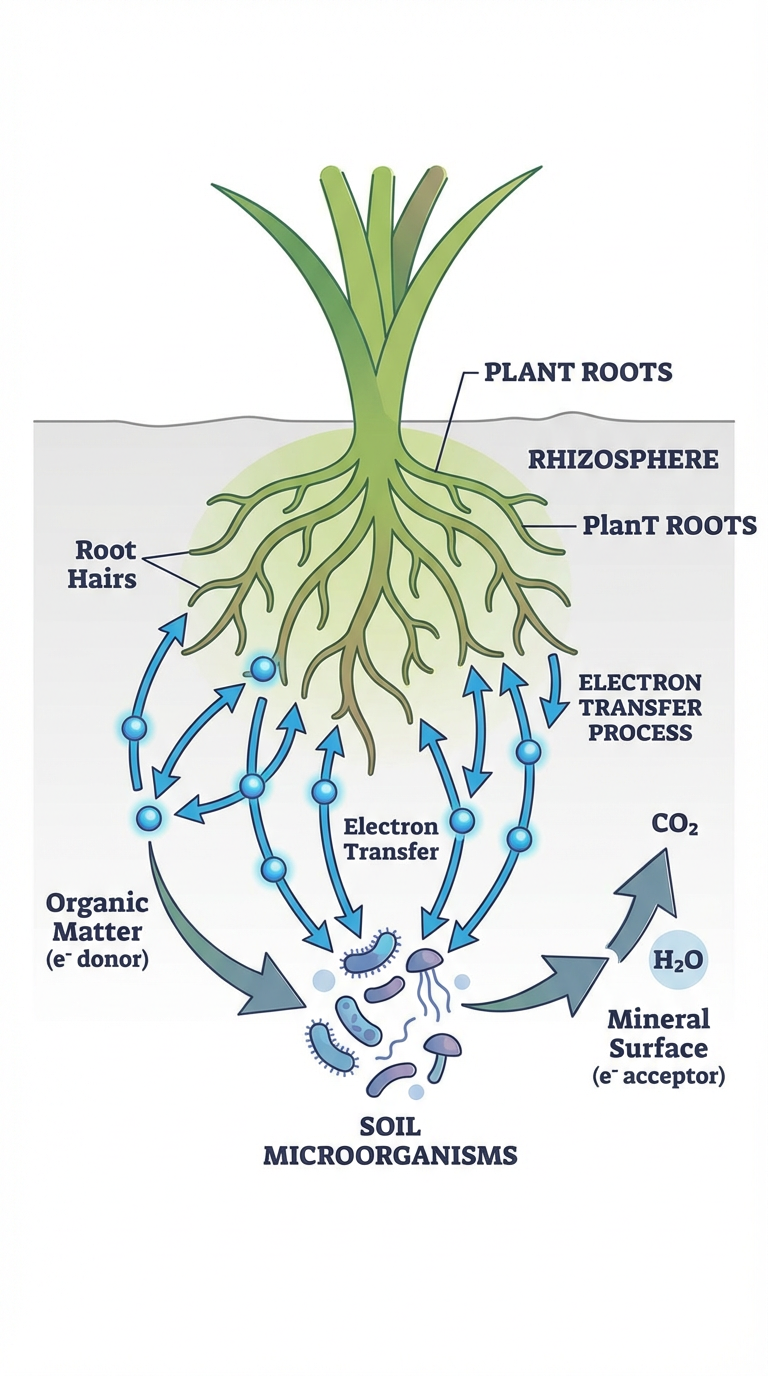
To understand the continuity of Pisphere’s power, one must first appreciate the silent, relentless engine of the plant. Photosynthesis, the process by which plants convert sunlight into chemical energy, produces far more organic matter than the plant needs for its own growth. This excess material, primarily sugars and organic acids, is exuded through the roots into the surrounding soil—a phenomenon known as rhizodeposition. This root exudate is the fuel source for the entire system.
The Pisphere technology is an elegant piece of bio-engineering that intercepts this natural energy flow. It is essentially a specialized Microbial Fuel Cell (MFC) that is embedded directly into the soil, around the plant’s root system. The key components are an anode and a cathode, separated by a proton exchange membrane, all buried beneath the surface.
The magic happens at the anode. The root exudates, rich in organic carbon, attract and feed a specific community of soil microorganisms. Among these, the electrogenic bacteria, such as the highly efficient Shewanella oneidensis MR-1, play the critical role. As these bacteria metabolize the organic matter, they release electrons as a byproduct of their respiration. In a normal environment, these electrons would be transferred to oxygen or other natural electron acceptors. In the Pisphere system, the anode acts as a highly attractive, artificial electron acceptor. The bacteria transfer the electrons directly onto the anode, which then travel through an external circuit to the cathode, generating a continuous electrical current.
This process is inherently continuous because the plant’s metabolic processes—the creation and exudation of organic matter—do not cease when the sun sets. While the rate of photosynthesis slows at night, the plant continues to respire and exude matter as part of its ongoing life cycle. The soil microbiome, constantly fed by the roots, continues its work of decomposition and electron release, ensuring a steady, low-voltage flow of power around the clock. This is the fundamental difference from solar power: Pisphere is powered by the life of the plant, not just the light of the sun.
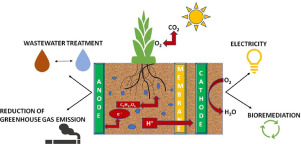
The efficiency of this electron transfer is significantly enhanced by the use of specialized bacteria like Shewanella oneidensis MR-1. These organisms are masters of extracellular electron transfer, effectively acting as biological wires that bridge the gap between the organic fuel and the electrode. The result is a system that is not only clean and continuous but also remarkably space-efficient, requiring no above-ground infrastructure beyond the plants themselves.
The Economics of Eternity: Cost, Efficiency, and Scale
In the energy sector, innovation is often judged by three metrics: capital cost, operational efficiency, and scalability. Pisphere’s Plant-MFC technology presents a compelling case across all three, particularly when compared to the established renewable giants. The low-voltage, high-reliability nature of the power generated positions it uniquely for a decentralized, smart-grid future.
The operational economics are perhaps the most striking. Traditional renewable energy sources, while having zero fuel cost, incur significant maintenance expenses. Solar panels require cleaning and occasional replacement of inverters, and wind turbines demand complex mechanical upkeep. Pisphere, by contrast, is a buried, passive system. Its primary maintenance involves ensuring the health of the plant and the soil—a process that is often part of standard agricultural or landscaping practice anyway. The projected maintenance cost is astonishingly low: $10-15 USD per year. This stands in stark contrast to the estimated annual maintenance for solar ($20-30) and wind ($40-60) per comparable unit of power generation. This low cost profile ensures long-term viability and rapid return on investment, especially for remote or difficult-to-access installations.
In terms of output, the technology is designed for distributed, low-power applications. A 10m² area of planted Pisphere cells can generate approximately 250-280 kWh annually. While this output may seem modest compared to a utility-scale solar farm, its value lies in its continuity and location. This power is generated precisely where it is needed, eliminating transmission losses and the need for expensive grid connections.
The true economic value of Pisphere is not in replacing power plants, but in enabling a new class of applications that were previously impossible or prohibitively expensive. Imagine a world where every public park bench, every urban green space, and every agricultural field is a self-sustaining power source.
| Feature | Pisphere Plant-MFC | Solar PV (Comparable Scale) | Wind Turbine (Comparable Scale) |
|---|---|---|---|
| Power Source | Plant Respiration & Soil Microbes | Sunlight | Air Movement |
| Continuity | 24/7 (Day & Night) | Intermittent (Day Only) | Intermittent (Wind Dependent) |
| Maintenance Cost (Annual Est.) | $10 – $15 USD | $20 – $30 USD | $40 – $60 USD |
| Infrastructure | Buried, Space-Efficient | Above-Ground Panels | Tall Towers/Blades |
| Waste/Emissions | Zero Waste, Carbon Neutral | Manufacturing Waste | Manufacturing Waste |
| Primary Application | Decentralized, Low-Power IoT | Grid-Scale & Residential | Grid-Scale |
This table underscores the unique value proposition: Pisphere is the only renewable source that offers continuous, low-cost power generation with zero visual or physical footprint, making it ideal for integration into existing urban and agricultural landscapes.
The Symbiotic Future: Applications Beyond the Grid
The most exciting aspect of Pisphere is its potential to redefine the infrastructure of the smart world. Because the technology is embedded, space-efficient, and requires only the presence of plant life, its applications are limited only by our imagination. It is the perfect power source for the burgeoning Internet of Things (IoT) ecosystem, particularly in environments where traditional power lines are impractical or non-existent.
1. Smart Agriculture and Precision Farming: In vast agricultural fields, the cost of running power lines to every sensor, monitor, and automated valve is astronomical. Pisphere eliminates this barrier. By integrating the Plant-MFC into the soil of a crop field, every plant becomes a node in a self-powered sensor network. These sensors can continuously monitor soil moisture, pH levels, nutrient content, and temperature, transmitting data wirelessly to central hubs. This enables true precision agriculture, optimizing resource use, increasing yields, and reducing environmental impact—all powered by the very crops they are monitoring.

2. Public Infrastructure and Urban Greening: Imagine streetlights, public Wi-Fi hotspots, or emergency call boxes powered by the trees and planters in a city park. Pisphere allows urban green spaces to contribute actively to the city’s energy needs. This is particularly relevant for B2G (Business-to-Government) applications, where cities are seeking to meet ambitious carbon-neutral targets. The technology can be seamlessly integrated into eco-parks, green roofs, and vertical gardens, turning aesthetic landscaping into functional, energy-generating infrastructure. This integration supports the vision of a truly Eco-Park Smart City, where nature and technology are indistinguishable.
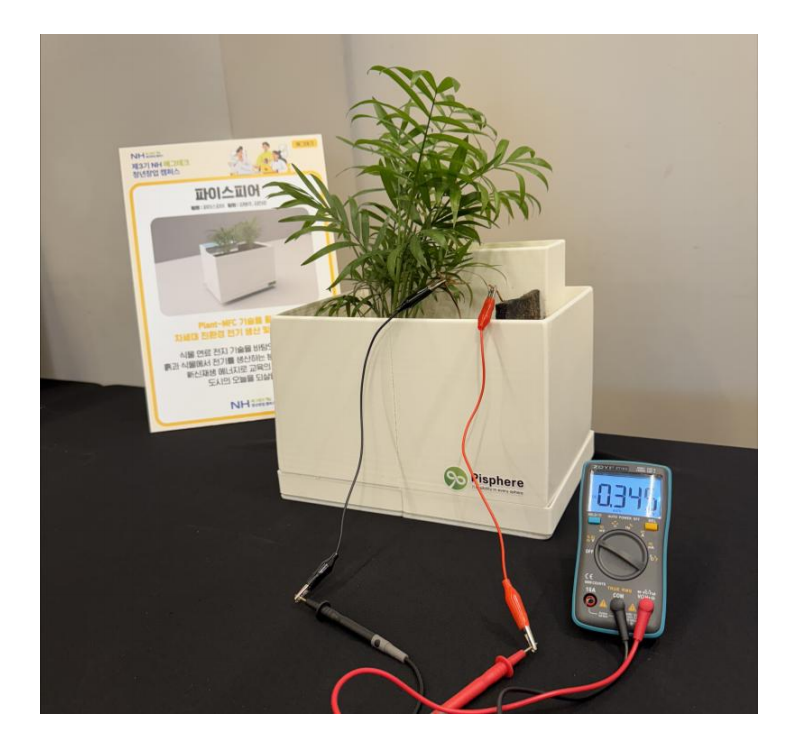
3. Educational and Consumer Kits: The technology’s simplicity and safety make it an ideal educational tool. Pisphere educational kits allow students and enthusiasts to witness the miracle of bioelectricity firsthand, connecting a small LED or a clock to a living plant. This not only democratizes access to renewable energy technology but also fosters a deeper appreciation for the biological processes that sustain life. For the B2C market, small-scale Plant-MFCs can power smart home sensors, small displays, or ambient lighting, turning indoor plants into functional, low-power devices.
4. ESG and Corporate Sustainability: For B2B applications, particularly in construction and corporate sustainability (ESG), Pisphere offers a unique, verifiable path to carbon neutrality. Integrating the technology into corporate campuses, green walls, or landscaping provides a tangible, living demonstration of commitment to sustainability. It is a zero-waste, carbon-neutral power source that enhances the environment rather than detracting from it, offering a powerful narrative for environmental stewardship.
The ability to generate power continuously, without the need for external fuel or large-scale battery storage, makes Pisphere a foundational technology for a truly decentralized and resilient energy future. It is a quiet revolution, rooted in the earth, that promises to power the next generation of smart devices and sustainable cities.
The Deep Ecology of Power: A Paradigm Shift
The ultimate significance of Pisphere extends beyond kilowatt-hours and maintenance costs; it touches upon a fundamental shift in our ecological relationship. For too long, human technology has been defined by extraction and opposition—we extract fossil fuels, we oppose the wind with massive turbines, and we cover the earth with solar panels. Pisphere introduces a technology of symbiosis.
The Plant-MFC system is not a drain on the plant; it is a partner. The bacteria consume the organic waste that the plant naturally sheds, and in return, they generate a current that can power monitoring systems to ensure the plant’s optimal health. The system is entirely closed-loop and zero-waste. The only byproduct is clean water and a small, continuous stream of electricity. This deep ecological integration is the key to its long-term success and its claim to true sustainability.
The continuous nature of the power is a metaphor for the continuity of life itself. Unlike the sudden bursts of power from a solar array or the erratic output of a wind farm, Pisphere’s energy flow mirrors the steady, persistent rhythm of the biosphere. It is a constant, low-level hum of energy that is always there, always available, much like the slow, steady growth of a forest or the ceaseless turning of the seasons.
This constant availability is what makes the “24/7” promise so critical. It eliminates the need for complex, energy-intensive storage solutions for these specific applications. For a remote sensor that needs to send a small packet of data every hour, or a low-power LED that needs to glow all night, the Plant-MFC provides the perfect, self-contained solution. It is a power source that is inherently resilient, decentralized, and immune to the large-scale failures that plague centralized grids.
The journey from the initial research at Seoul National University to the commercial application of Pisphere is a testament to the power of biomimicry—learning from and replicating nature’s own designs. By focusing on the microbial world and the plant’s natural waste cycle, the founders have tapped into an energy source that has been operating silently for millennia.

The Quiet Revolution: Empowering the Decentralized World
The future of energy is decentralized, distributed, and deeply integrated into our environment. Pisphere is not just another green technology; it is the physical manifestation of this future. It offers a path to energy independence for countless small devices and remote locations, freeing them from the constraints of the traditional power grid.
Consider the implications for global development. In areas without reliable grid access, Pisphere can provide the continuous, low-level power needed for essential services: water quality monitoring, remote health sensors, or educational devices. It is a technology that empowers communities by leveraging the resources they already possess—their soil and their plants.
The transition to a sustainable world requires a portfolio of solutions, each excelling in its niche. Solar and wind will continue to dominate utility-scale generation, but Pisphere fills the critical gap of continuous, embedded, low-power generation. It is the technology that turns the background of our lives—the parks, the gardens, the agricultural fields—into active participants in the energy equation.
The challenge now is one of adoption and scale. As Pisphere moves from research labs to commercial deployment, the world must recognize the profound potential of this quiet revolution. It is a call to action for urban planners, agricultural technologists, and corporate leaders to look down, not up, for the next great leap in green energy. The promise of continuous plant power is not just about generating electricity; it is about cultivating a more harmonious, resilient, and truly sustainable relationship with the living world. The power is already there, flowing through the roots of every plant. Pisphere simply gives it a path to light the way forward.
The sheer elegance of this solution—powering the future with the continuous, gentle process of life—is a powerful reminder that the most revolutionary technologies are often those that work with nature, not against it. The 24/7 green energy promise is here, rooted in the soil, waiting to be fully realized.
Conclusion: The Living Grid
The journey to a carbon-neutral world is paved with innovations that challenge our preconceptions. Pisphere’s Plant-MFC technology stands as a monumental challenge to the notion that renewable energy must be intermittent. By tapping into the constant, living energy cycle of the plant and the soil microbiome, it offers a source of power that is as reliable as life itself. It is a technology that is zero-waste, carbon-neutral, incredibly low-maintenance, and perfectly suited for the decentralized, sensor-driven world we are building. The living grid is emerging, and its power source is the quiet, continuous pulse of the Earth.